Live Streaming App Source Code Due Diligence Checklist
Buyer due diligence / live app source code
Live Streaming App Due Diligence Before You Buy Source Code
A practical field checklist for founders and agencies reviewing live streaming app source code: room stability, wallet logic, gift economy, moderation, admin workflow, and the boring details that decide whether the product survives the first month.
Most people inspect a live streaming app from the wrong end. They open the demo, tap around the home feed, send one gift, maybe start a test room, and then ask for the price. That is understandable, but it misses the part where these products usually break.
A live app does not fail because the home page is ugly. It fails because the room state gets confused when a host reconnects. It fails because a gift animation looks fine with one sender, then blocks the queue when ten viewers tap at the same time. It fails because the wallet balance shown to the user is not the same balance used by the settlement job. It fails because the admin panel can ban a room, but nobody can explain what happened when the host complains.
If you are buying source code for a white-label live platform, the important question is not “does it have Bigo-like features?” The better question is: can this codebase handle messy users, weak phones, failed payments, impatient hosts, and a support team that needs answers fast?
This post is written as a buyer-side review note. It is not a feature list. It is the sort of checklist I would keep open while reviewing a demo, an APK, or a source-code package. If you need the broader commercial overview, start with the bigo live clone source code page, then come back here and use this as a due diligence layer.
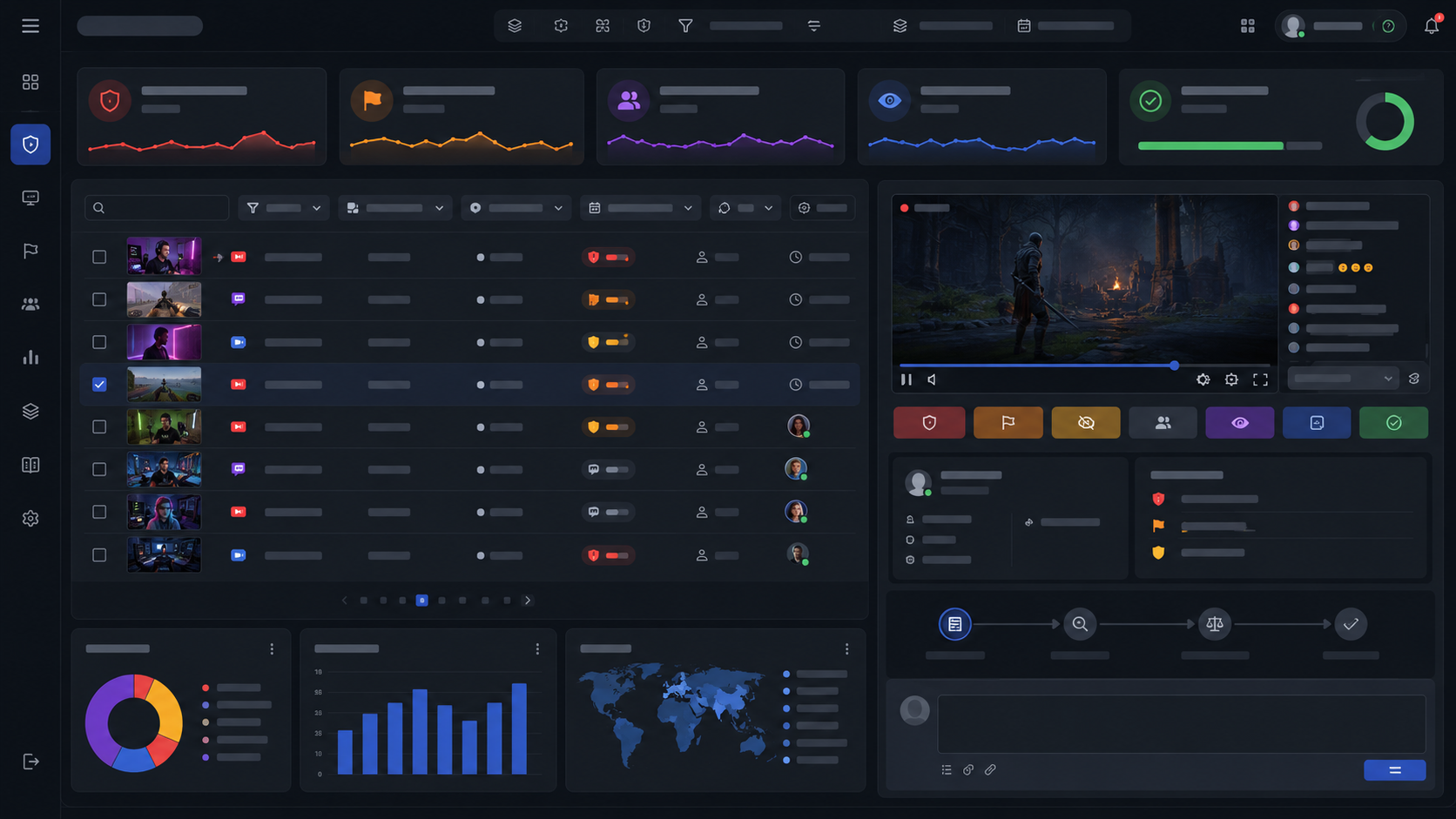
Start With The Room Lifecycle, Not The Home Screen
The room is the real product. Everything else sends traffic toward it. A polished home feed can hide weak engineering for a while, but a room lifecycle issue will show itself in the first real launch.
When reviewing source code, ask the seller to walk through a host session from cold start to teardown. Do not accept a quick demo where the host opens a room and leaves after ten seconds. Stay inside the room and look for state transitions.
- Host creates a room, then backgrounds the app for 20 seconds.
- Host switches network from Wi-Fi to mobile data.
- Viewer joins during the reconnect window.
- Viewer sends a paid gift while the host stream is unstable.
- Admin closes the room while users are still inside.
- Host tries to reopen the room after a forced close.
A strong codebase has a clear answer for each step. A weak one depends on luck. The UI may still look normal, but the backend room record, RTC channel, message socket, and wallet transaction may already disagree with each other.
One useful sign is naming. Good projects usually have boring, consistent states: created, live, reconnecting, closed_by_host, closed_by_admin. Messy projects often store room status as scattered integers with no central map. That is not automatically fatal, but it means your team will spend time decoding behavior that should have been explicit.
{
  "room_id": "r_84291",
  "host_id": "u_1024",
  "room_state": "reconnecting",
  "rtc_channel": "live_r_84291",
  "viewer_count_visible": 138,
  "viewer_count_confirmed": 121,
  "last_host_heartbeat_ms": 18400,
  "close_reason": null
}
The exact JSON does not matter. The habit matters. You want a system where important state can be inspected, logged, and explained.
Gift Economy Review: Look Past The Animation
Gift animation sells the feeling. Gift accounting pays the bills. A demo can impress buyers with cars, castles, rockets, lucky gifts, combo gifts, and entrance effects. Those assets matter, but they are only the surface.
The deeper question is whether the gift system is built as a transaction pipeline or as a UI event with a price attached. If the code treats gift sending as “deduct coins, show animation, notify room,” it will eventually create disputes. A better flow records intent, checks balance, writes an immutable transaction, broadcasts the event, and then settles host earnings under a rule the admin can audit.
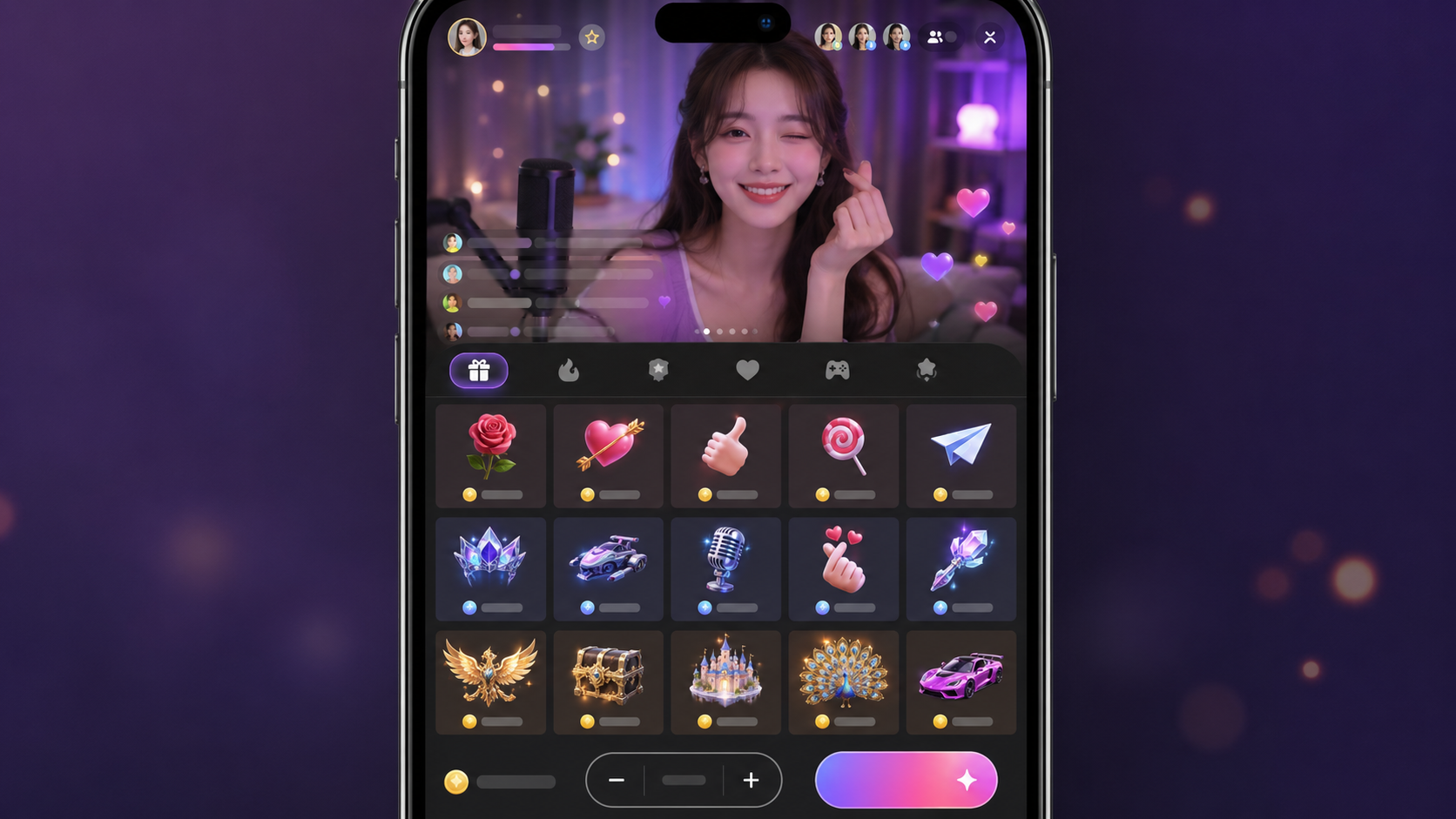
During review, ask for these five things:
- A gift table with versioned price, asset URL, animation type, and enabled markets.
- A transaction table that stores sender, receiver, room, gift, coin cost, and status.
- A host income rule that separates gross gift value from withdrawable earnings.
- A retry rule for socket broadcast failures.
- A moderation rule for suspicious high-frequency gifting.
The last one is easy to ignore. In a small launch, high-frequency gifting looks like success. In a real launch, it can be fraud, agency manipulation, bonus farming, or stolen payment instruments. A serious live streaming platform needs a way to separate healthy spending from fake activity. You do not need a giant anti-fraud department on day one, but you do need data your future team can use.
Wallet Flow Is Where Cheap Code Becomes Expensive
Wallet mistakes are rarely dramatic in the demo. They show up later, after the app has real users, real recharge orders, and real hosts asking why their payout is missing.
Look for separation between the user wallet, recharge orders, gift spending, host earnings, and withdrawals. If all of these are handled by one balance field, slow down. It may work for a toy app. It is painful for a business.
A clean wallet design usually keeps at least three layers:
- Coin balance: what the viewer can spend inside the app.
- Earning balance: what the host has earned before review or settlement.
- Withdrawable balance: what can be paid out after rules, fees, and holds.
This distinction matters because live apps are full of delayed facts. A payment provider may confirm late. A chargeback may arrive days later. A host may violate content policy after receiving gifts. A campaign bonus may count for ranking but not for cash withdrawal. If the wallet model is too simple, every later business rule becomes a patch.
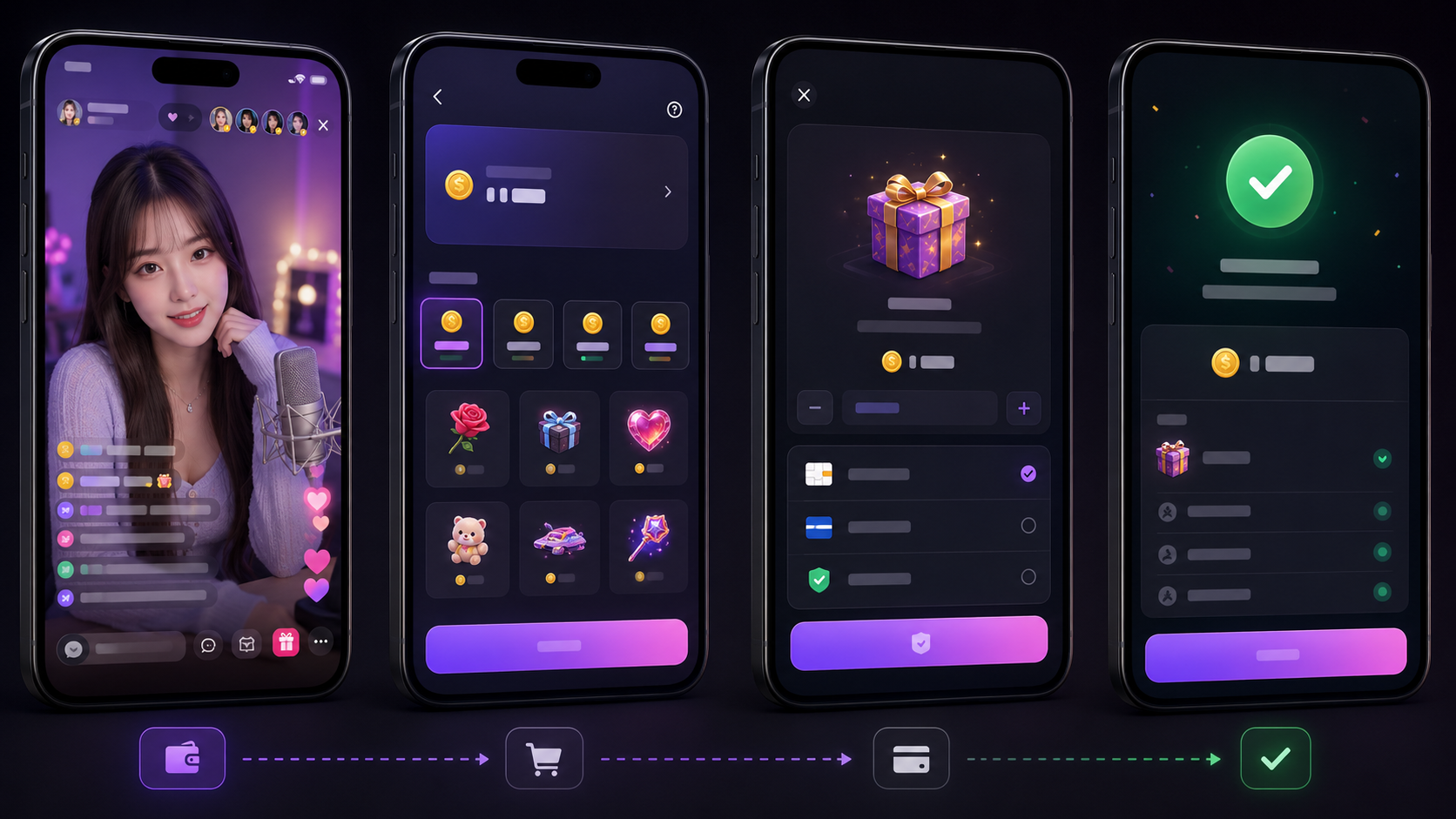
Ask the seller to show one recharge from request to callback. Ask what happens if the callback arrives twice. Ask whether the order is idempotent. Ask whether coins can be manually adjusted by admin, and if yes, whether the operator, reason, and old/new balance are recorded. These are not fancy questions. They are the minimum needed to run a money product without guessing.
Admin Panel: The Part Buyers Underrate
Many buyers focus on the app client because that is what users see. Operators live in the admin panel. If the admin workflow is weak, every small issue becomes a developer task.
A useful admin panel should answer plain questions quickly:
- Which rooms are live right now?
- Which rooms had abnormal disconnects today?
- Which hosts received large gifts from new accounts?
- Which users requested withdrawal this week?
- Which moderator closed a room and why?
- Which agency brought the host, and what is their settlement rule?
If the admin panel is only a CRUD backend with banners, gifts, users, and reports, it may be enough for a screenshot. It is not enough for operations. A real live product needs timeline views, searchable logs, and role permissions. Support should not need database access to answer basic user questions.
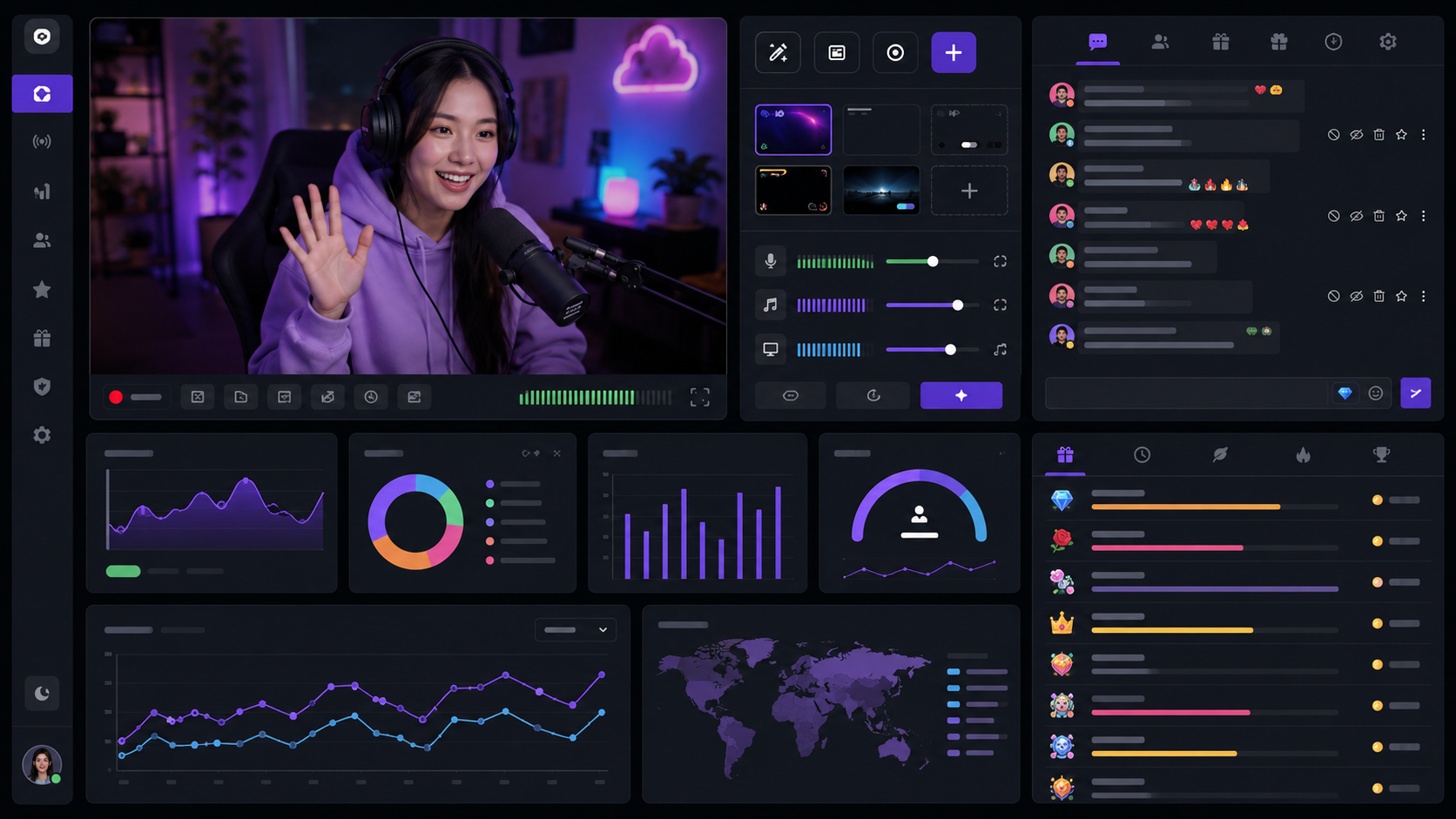
Permissions deserve special attention. The person who edits gift prices should not automatically approve withdrawals. The person who reviews reported rooms should not be able to change recharge packages. Good permission design does not look exciting in a sales demo, but it prevents internal mistakes later.
Low-End Phone Performance Is A Business Issue
Founders often test demos on new phones. Users often do not. If your launch market includes Southeast Asia, South Asia, Latin America, parts of the Middle East, or emerging agency markets, low-end Android performance matters more than many design details.
Check the app under load: room open, gift animation, chat scrolling, beauty filter, profile popup, and network reconnect. The question is not whether the app can run one feature. The question is whether it can run the normal messy combination of features without turning the room into a slideshow.
Watch for these problems:
- Gift animations decoding on the main thread.
- Large image assets loaded without size control.
- Chat list re-rendering too much during high message speed.
- Beauty filters enabled by default on devices that cannot handle them.
- No fallback mode when frame rate drops.
A good product has graceful degradation. Maybe the full-screen gift is skipped on low-memory devices. Maybe beauty defaults are reduced. Maybe room effects are batched. Users forgive a lighter effect. They do not forgive a frozen room.
Code Review Signals That Matter
You do not need to read every file before buying. You do need to inspect the areas where bad architecture causes expensive rewrites.
Ask for a guided code review around these modules:
- Room lifecycle and RTC joining logic.
- Socket message handling and reconnect policy.
- Gift transaction creation and settlement.
- Recharge callback and order idempotency.
- Withdrawal approval and audit log.
- Admin role permissions.
- Media asset loading for gifts, avatars, and banners.
- Moderation reports and ban/unban behavior.
You are looking for clarity. Clear code is not always beautiful code. Sometimes commercial source code has old modules, patched screens, and odd naming. That is normal. The danger is not ugliness. The danger is hidden coupling: wallet logic inside controller code, room state duplicated in three services, admin actions with no audit trail, or payment callback code that can run twice.
If you are comparing multiple packages, create a small scorecard. Give each area a score from 1 to 5, then write one sentence explaining the reason. The sentence matters more than the number because it forces the reviewer to be specific.
room_lifecycle: 4
reason: reconnect and admin close are separate states; host heartbeat is logged.

gift_pipeline: 3
reason: transactions exist, but retry and suspicious gifting rules are weak.

wallet_flow: 2
reason: recharge order is clear, but host earnings and withdrawable balance are mixed.

admin_ops: 3
reason: useful room list exists, but audit trail needs more detail.
What Makes A Source Code Package Safer To Buy
No vendor can remove all risk. A live streaming app is too many systems at once: RTC, socket, feed, wallet, admin, content moderation, agency operations, payment, analytics, and customer support. The safer package is the one where risk is visible early.
For me, the stronger signs are simple:
- The seller can explain room state without opening random files.
- The wallet flow has order records, transaction records, and audit logs.
- The admin panel is built for support work, not only data editing.
- The app has been tested on weaker Android devices.
- Gift and payment logic can be reviewed separately from UI effects.
- The package includes deployment notes, server requirements, and change boundaries.
That last point sounds boring, but it is important. A buyer does not only buy code. They buy the ability to change the product without breaking it. If every small change requires guessing, the cheap package becomes expensive fast.
Where This Fits In A Bigo-Style Launch Plan
A Bigo-style product usually has three layers. The first layer is visible: rooms, profiles, gifts, rankings, hosts, agencies, and recharges. The second layer is operational: admin review, support, payout handling, suspicious behavior, campaigns, and market configuration. The third layer is engineering: RTC reliability, socket consistency, wallet integrity, logging, deploy process, and monitoring.
Most sales pages spend too much time on the first layer. Google’s own guidance about helpful content points in the opposite direction: provide original, useful information that helps the reader make a decision. For a buyer, that means showing the second and third layers clearly.
If you are evaluating a complete solution overview, use this post as the harder checklist. The demo should still feel good, of course. But the final decision should come from the parts users do not see until something breaks.
FAQ
Should I buy a live streaming app source code package only after seeing the APK?
No. The APK is only the surface. You should also review the admin panel, wallet flow, gift transaction model, deployment notes, and code structure around rooms and payments.
Is a Bigo-style app mostly about live video quality?
Video quality matters, but it is not enough. The business depends on gifts, wallet accuracy, host retention, moderation, agency operations, and support workflow. A smooth stream with weak money logic is still risky.
What is the biggest red flag in source code review?
Mixed financial state. If recharge, coin spending, host earnings, and withdrawals all depend on one simple balance with little audit history, expect problems when the app starts making real money.
Can a buyer customize the app after purchase?
Usually yes, but customization is only safe when the project boundaries are clear. Before buying, check which parts are configuration, which parts need code changes, and which changes require backend migration.
Need help reviewing a live app source code package?
If you are comparing demos, APKs, admin panels, or Bigo-style live streaming source code, send the requirement and I can walk you through the practical checks before you pay.
WhatsApp: +44 7999 529473
Mail: [email protected]