An audio party room app is not the same thing as a plain voice call app. A voice call connects people. A party room creates a place where strangers can stay, talk, gift, play, follow hosts, join agencies, and return tomorrow. That difference changes the product design.
When buyers search for Yalla clone, audio party room source code, voice room app clone, or live voice chat app, they usually want this kind of product: public voice rooms with multiple mic seats, hosts, gifts, ranking, wallet, and admin control. The question is not whether the app can open a voice channel. The question is whether it can create a room economy.
This page focuses on the product and business side of audio party room source code. If you need a wider live-streaming source code package with video rooms, check the complete solution overview. If your target product is voice-first, the details below matter more.
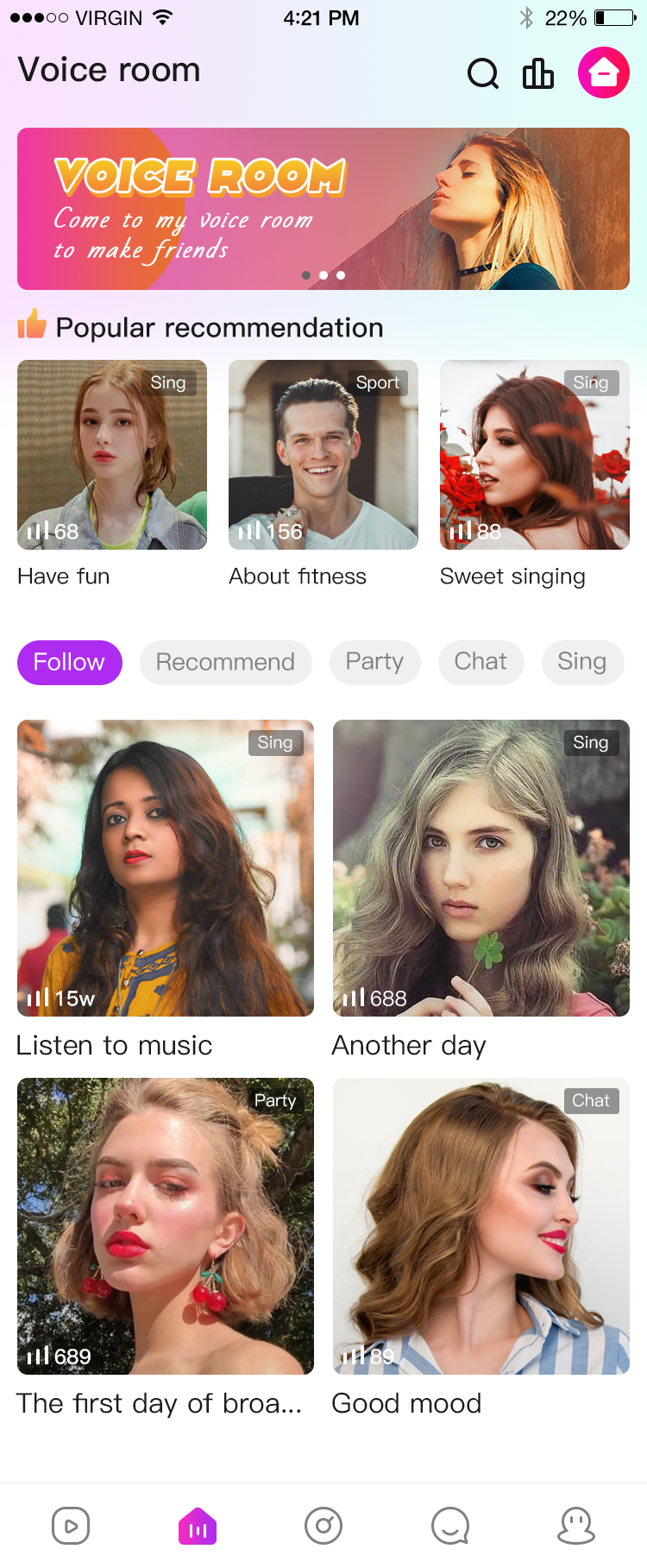
Public Rooms Need Discovery, Not Only Creation
A party room app lives or dies on discovery. Users open the app and need to find a room worth entering within seconds. That means room covers, topics, tags, language, region, host identity, active mic count, gift heat, and maybe game status.
A room list that only shows random rooms is weak. A better system lets operators feature rooms, boost agency rooms, separate language markets, and show live activity signals. For a new launch, this is important because empty rooms make the whole app feel dead.
- Hot rooms by gift activity or viewer retention.
- New rooms for discovery and host exposure.
- Language or region tabs for local market fit.
- Game rooms, music rooms, dating rooms, casual chat rooms.
- Private rooms by invite code or password.
Mic Seat Flow Shapes The Social Rules
Mic seats are not only technical slots. They are social rules. Who can speak? Who gets priority? Can the host invite someone? Can users apply for a seat? Can VIP users bypass queue? Can a seat be locked for a guest?
When reviewing source code, test seat flow like a real room: several listeners apply at once, host approves one, rejects one, locks a seat, mutes someone, and leaves the room. The system should not lose state or confuse users.
mic_request:
  room_id: party_3308
  requester_id: u_2091
  queue_position: 4
  status: pending
  requested_at: 2026-06-30 13:12:06

host_action:
  action: approve_mic
  seat_index: 5
  operator: host
  result: user_joined_mic
Gifts, Games, And Ranking Create The Revenue Loop
Audio party rooms monetize through repeated small actions. A user sends a gift to support the host. A room ranking updates. A game round starts. A VIP entry effect appears. Someone wants to be noticed, so they spend again. This is the loop buyers are really paying for.
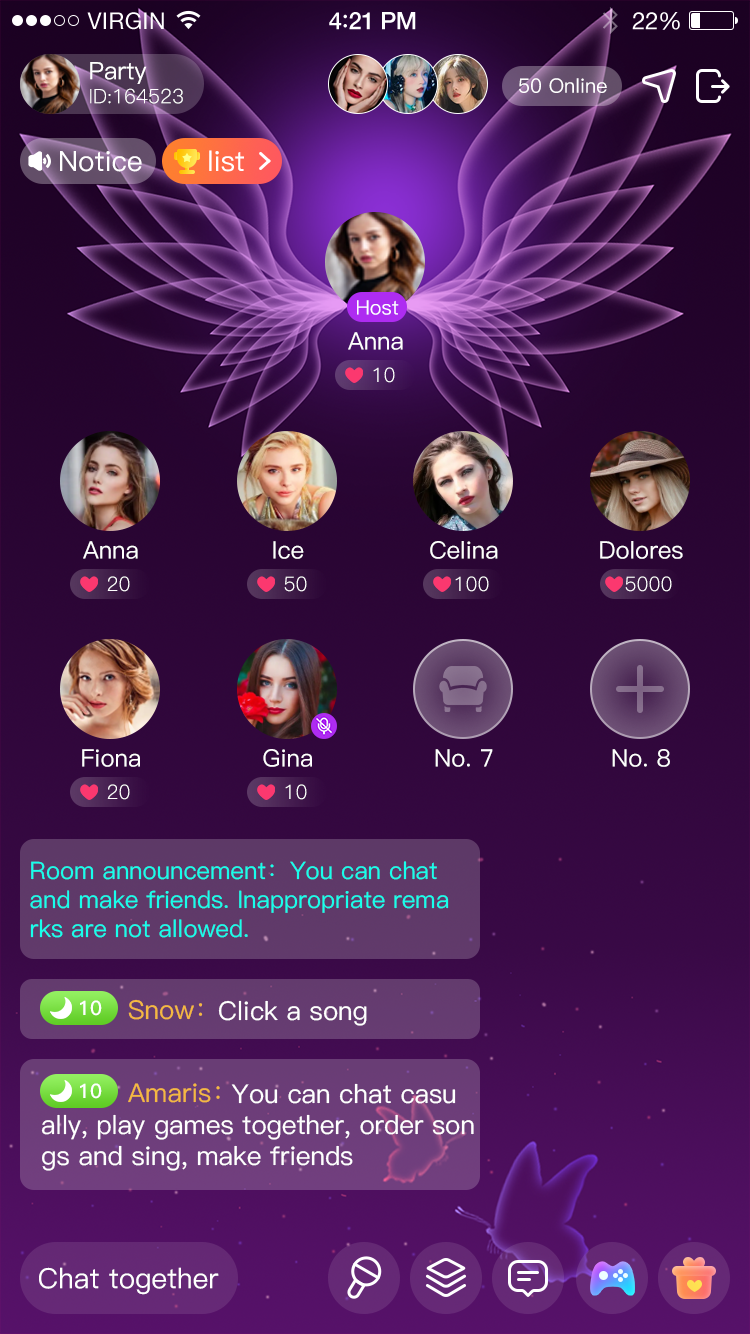
Check whether the source code includes gift categories, room gift broadcast, lucky gifts, gift combo, user level, host level, room ranking, and wallet records. The UI can be changed later, but the transaction and settlement logic should be solid from the beginning.
Host Agencies Are Often The Real Supply Engine
Many audio party room apps need hosts before they need ads. A new app with no hosts feels empty. Agencies solve part of this by recruiting, training, and managing hosts. But agency logic needs admin support.
Useful agency features include host binding, agency dashboard, host live hours, valid gift value, commission rule, payout export, and risk flags. If the code has rooms and gifts but no agency workflow, you may need custom development before launch.
Private Rooms And Paid Rooms Need Careful Rules
Private audio rooms can be useful for paid communities, VIP events, dating scenarios, or agency-managed sessions. But private rooms need clear entry rules: password, invite link, paid ticket, host approval, or membership level. If these rules are mixed badly, support problems appear quickly.
- Who can create private rooms?
- Can admin inspect private room reports?
- Can paid room access be refunded?
- Can the host kick a paid user?
- Does room history record entry payments?
Buyer Acceptance Checklist
- Create public, private, and featured rooms.
- Run mic request, invite, mute, kick, lock, and reconnect tests.
- Send gifts and verify wallet ledger, host income, and room ranking.
- Bind host to agency and export host performance.
- Test game room or activity room flow if included.
- Review admin permissions for finance, moderator, agency manager, and support.
FAQ
Is an audio party room app the same as Clubhouse?
Not exactly. Clubhouse-style apps focus more on social audio discussions, while audio party room apps usually include gifts, hosts, agencies, games, ranking, and wallet monetization.
What keywords are useful for this market?
Audio party room app clone, Yalla clone app, voice chat room source code, live voice room app, and social audio app source code are all useful angles.
What should be included in source code delivery?
Mobile app, backend API, admin panel, room socket logic, wallet and gift system, deployment notes, database schema, and third-party audio SDK configuration.
Need an audio party room app clone?
If you want a Yalla-style voice party room product with mic seats, gifts, games, wallet, agencies, and admin panel, contact me directly.
WhatsApp: +44 7999 529473
Mail: [email protected]