Bigo Live Clone App for Creators and Agencies
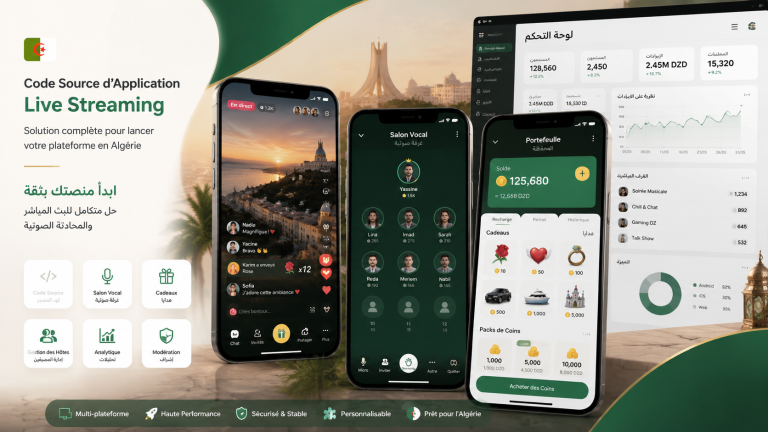
A Bigo Live clone is often judged too early by screenshots. The better question is whether the product can hold live behavior after launch. That means the room should feel active, the gifting flow should be clear, and the admin side should stay manageable once real users arrive. A pretty demo is easy. A stable live app is the hard part.
For creators and agencies, the value of a live streaming platform is not only entertainment. It is the ability to turn attention into repeat sessions, repeat sessions into gifts, and gifts into predictable revenue. If the product does not support that chain cleanly, the platform becomes noisy and hard to operate.
What Creators Expect From the App
Creators usually care about a few practical things first. They want fast room setup, clear host controls, and a simple way to understand who is watching and what action to take next. They also need a room experience that does not feel clunky when the audience starts talking or gifting at the same time.
- Simple go-live flow
- Chat that stays responsive under load
- Gift feedback that is visible and immediate
- Moderation tools that do not interrupt the room too often
- Host visibility into audience behavior
That list sounds basic because it is. But if even one of these pieces is weak, creators notice fast. They may not say “the architecture is poor,” but they will say the app feels hard to use, and that is usually enough to hurt retention.
Why Agencies Care About Operations Tools
Agencies are not just buying an app. They are buying control over a creator network. They need dashboards, room oversight, payout visibility, and a way to manage host schedules without constant manual work. A Bigo Live clone that ignores agency workflows may still look fine in a demo, but it becomes painful when real operations begin.
In many cases, agency operators want one thing above all else: fewer surprises. They need to know which hosts are active, which rooms are underperforming, and where monetization is dropping. If the platform gives them that, the product becomes easier to keep alive.
Monetization Features That Matter First
Virtual gifts are usually the first monetization layer people care about, but not the only one. Depending on your launch model, subscriptions, wallet top-ups, campaign gifts, or premium room access may matter too. The important part is not how many monetization features you claim. It is whether the core flow feels understandable to the user.
A confusing gift shelf or unclear wallet state can lower conversion very quickly. If the app makes it hard to see what a gift does or when it is delivered, the platform loses trust. That is why monetization should be tied to room behavior, not added as decoration.
Android, iOS, and Web Need Different Launch Priorities
For a creator-facing product, platform order matters. Android may be the easiest first release in some markets. iOS may matter more where buyer quality is higher. Web can be useful for admin review, testing, or lighter viewer access. There is no universal order, but there is a wrong order: launching everything half-ready at once.
It usually works better to define one primary launch surface and one secondary surface for management or testing. That way the team can stabilize one flow before spreading attention across three. The better the sequence, the less rework later.
What a Buyer Should Ask Before Choosing a Solution
- Can the app handle real-time chat and gifting without visible lag?
- Does the admin panel support reports, moderation, and user control?
- How much of the UI can be rebranded for our market?
- What is included in post-launch support?
- Can we start with source code ownership, not a locked rental model?
These questions are more useful than asking for a feature dump. A platform that answers them clearly is usually easier to work with later.
Where This Fits in Your Growth Plan
A Bigo Live clone works best when the launch team has a rough plan for creators, content cadence, and monetization rhythm. If the product is only a technical build, the business side ends up improvising too much. The app should give you a base for repeatable operations, not just a visual clone of a social app.
For the operational side, this growth-focused guide is a useful companion: retention ops for small creator agencies. For the main offer page, keep this link in the plan: Bigo Live Clone source code and white-label live streaming solutions.
FAQ
Is this suitable for a creator agency?
Yes. It fits agencies that need host tools, room visibility, and monetization control.
Do monetization features need to be live on day one?
The core ones should be. Gifts and wallet flow are usually not optional for this kind of product.
What is the biggest mistake buyers make?
They buy a demo without checking whether the operational tools are strong enough for real use.
Next Step
If you want a Bigo Live clone app built for creators, agencies, and repeat monetization, ask for a live demo and a deployment scope that matches your market.